Morgan Koch · 2 September 2026
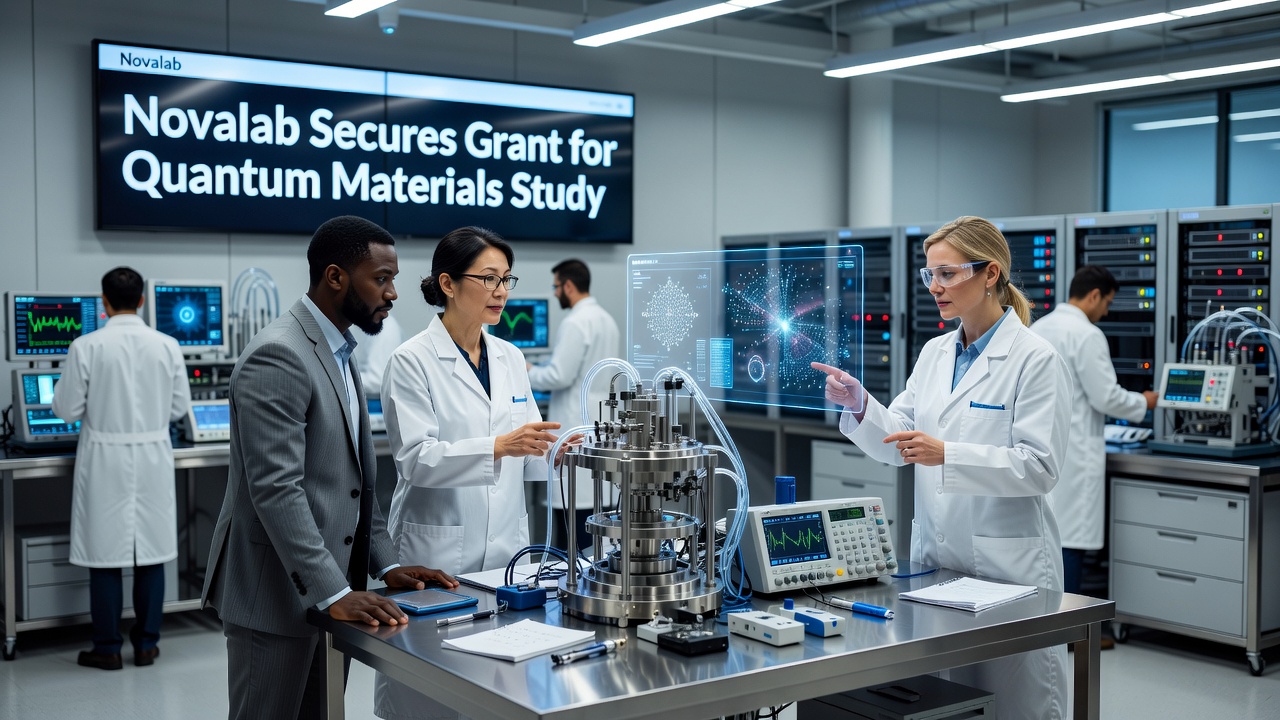
Novalab Innovation Research has been awarded a significant grant to further its investigations into quantum materials. The funding comes from the Engineering and Physical Sciences Research Council and amounts to 3.2 million pounds spread across four years. This investment underscores the growing importance of quantum technologies in the UK's scientific landscape. Researchers at Novalab will use the resources to develop innovative approaches to material design that could revolutionize electronics and quantum computing.
Research Focus Areas
The study will prioritize the creation of hybrid quantum materials that exhibit unique properties under extreme conditions. Teams will investigate magnetic and electronic interactions in two-dimensional structures. Experiments will involve high-precision fabrication methods and theoretical modeling to predict material behaviors. Partnerships with industry leaders in semiconductor manufacturing are planned to facilitate technology transfer. Early results are expected within the first eighteen months, focusing on proof-of-concept demonstrations. Additional efforts include training programs for early-career researchers, ensuring the development of expertise in this specialized field. Workshops and seminars will be organized to share findings with the broader scientific community. The grant also covers the acquisition of state-of-the-art equipment, such as cryogenic systems and laser spectroscopy tools, essential for detailed analysis.
Broader Impacts and Future Directions
Beyond immediate scientific gains, this initiative is poised to contribute to national priorities in advanced manufacturing and digital innovation. Potential outcomes include more efficient solar cells and secure communication systems based on quantum principles. Novalab's work aligns with international efforts to harness quantum mechanics for practical technologies. Continued monitoring and evaluation will ensure the project meets its milestones, with reports published annually. The success of this grant could pave the way for further funding opportunities in related domains of materials science. Ongoing collaborations aim to integrate findings into scalable prototypes suitable for commercial applications within the next decade.